
Understanding the Difference Before You Mount a TV Outdoors
Many homeowners planning a patio, deck, pool area, or outdoor kitchen wonder whether they can simply use a regular indoor TV outside. After all, many outdoor installations are placed under a roof or on a covered patio.
Indoor TVs are built for climate-controlled spaces. Outside, they have to deal with humidity, temperature swings, dust, insects, moisture, and direct sunlight. While a roof or covered patio offers some protection, it does not fully protect a TV from outdoor conditions.
Outdoor TVs are built to handle exposure that can damage or shorten the life of a standard indoor television.
Can You Use an Indoor TV Outside?
The short answer is that you can, but it is generally not recommended as a long-term solution.
An indoor television is designed to operate in a climate-controlled environment. Once it is placed outdoors, you’ll run into several issues, such as:
- Temperature swings
- Humidity and moisture
- Direct sunlight
- Dust and debris
- Insects
- Wind-driven rain
Even if the indoor TV is installed under a covered porch, moisture and temperature fluctuations can still affect internal components over time.
Some homeowners choose to use an inexpensive indoor TV outdoors temporarily, but there is always a risk of reduced performance and a shorter lifespan.
What Makes an Outdoor TV Different?
Outdoor TVs are designed specifically for exterior environments. They include features that standard televisions typically do not offer.
Weather Resistance
Outdoor televisions are built with sealed components that help protect against moisture, humidity, dust, and insects.
Depending on the model, they may be designed for:
- Full sun locations
- Partial sun locations
- Covered outdoor spaces
Choosing the right category matters because the amount of sun exposure affects both visibility and performance.
Higher Brightness Levels
One of the biggest differences is brightness.
Even on a cloudy day, outdoor environments are dramatically brighter than most indoor spaces. A standard television that looks great inside may appear washed out outdoors.
Outdoor TVs often produce significantly more brightness to maintain a clear picture in daylight conditions.
Better Temperature Tolerance
Connecticut weather can be unpredictable throughout the year.
Outdoor televisions are designed to operate across a much wider temperature range than indoor models. This allows them to handle hot summer afternoons and colder evenings more reliably.
Durable Construction
Outdoor units are typically built with stronger materials, corrosion-resistant components, and protective finishes that help them withstand long-term exposure to the elements.
What Happens If You Leave an Indoor TV Outside?
Problems do not always happen immediately. In fact, an indoor television will probably work perfectly at first.
The issue is long-term exposure.
Over time, homeowners may experience:
- Screen damage from heat or direct sunlight
- Moisture-related internal failures
- Corrosion of electronic components
- Reduced image quality
- Shortened equipment lifespan
- Warranty issues
Most television manufacturers do not cover outdoor use under standard warranties.
Is a Covered Patio Enough Protection?
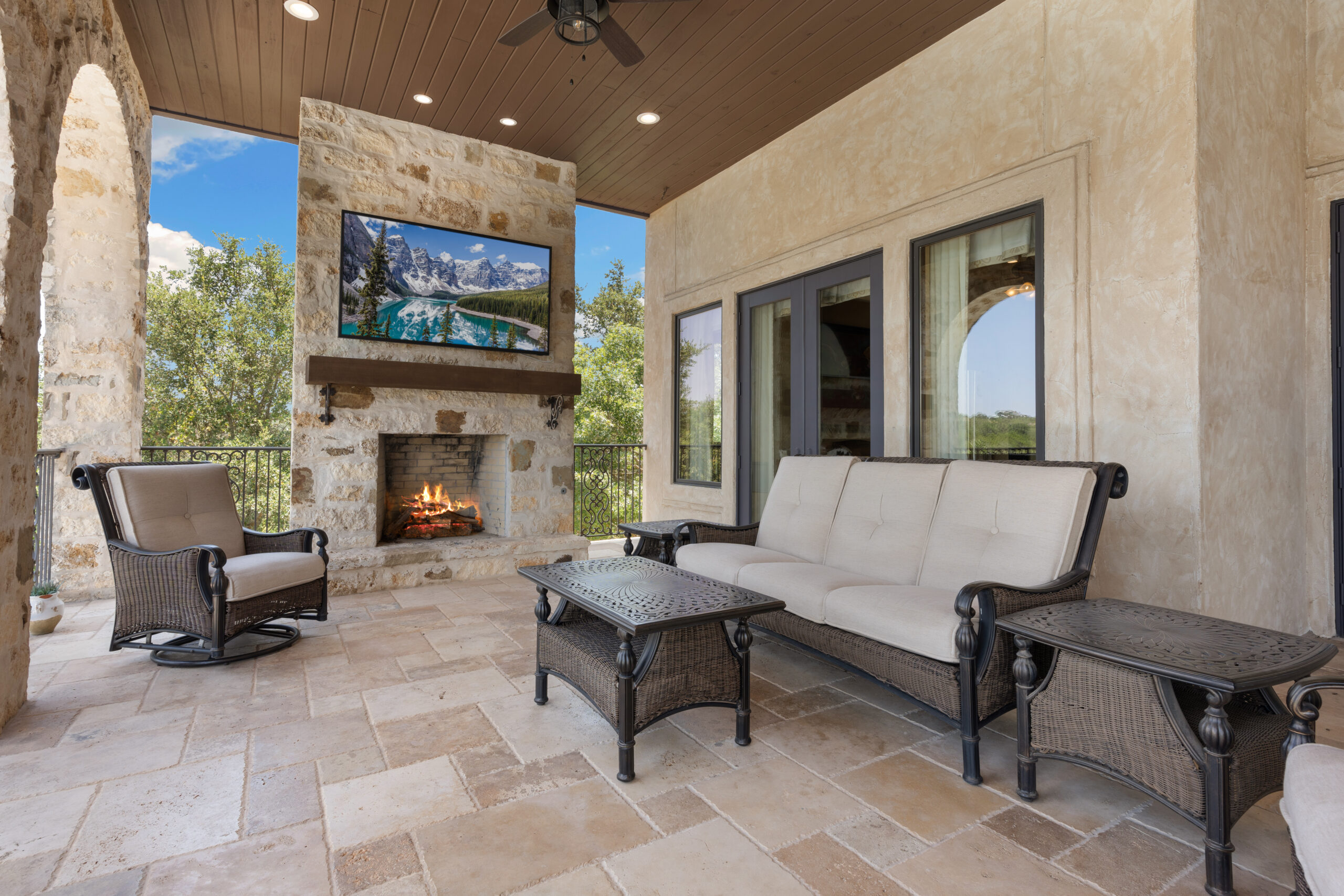
Many homeowners assume that a roof automatically makes an indoor TV safe outdoors.
Unfortunately, that is not always the case.
A covered patio may block direct rain, but it usually does not eliminate:
- Humidity
- Wind-driven moisture
- Temperature changes
- Dust and pollen
- Insects
For occasional use, some homeowners accept the risk. For a permanent installation, outdoor-rated equipment is generally the safer investment.
When an Indoor TV Might Make Sense
There are situations where homeowners choose an indoor television for an outdoor space.
This is most common when:
- The TV is only used occasionally
- The area is heavily protected from weather
- The budget is limited
- The homeowner understands the potential risks
In these situations, some homeowners accept that the television may have a shorter lifespan than it would in an indoor environment.
When an Outdoor TV Is Worth the Investment
An outdoor television becomes easier to justify when:
- The TV will remain outside year-round
- The space receives regular use
- The area gets significant sunlight
- The setup is part of an outdoor kitchen, patio, or pool area
- Long-term reliability is important
While outdoor TVs cost more upfront, they are designed specifically for outdoor conditions and often provide better visibility and a longer lifespan.
Considerations for Outdoor TV Installations
While having an adequate TV is essential for an outdoor installation, there are other aspects you should take into consideration when designing the space.
Speaker Placement
The way the sound moves differs between the indoor and outdoor spaces. The proper arrangement of speakers ensures that the sound quality is good and that you do not need to increase the volume excessively.
Viewing Angles
The mounting point of the TV determines whether watching it from different seats is convenient and enjoyable. Proper mounting decreases glare on the screen and increases visibility for all guests.
Lighting Conditions
Patio lights, landscape lighting, and nearby fixtures can all affect how the screen looks, especially at night. The goal is to keep the area comfortable and visible without washing out the picture.
Protection of Wiring and Electronic Devices
Power connections, streaming devices, and networking equipment should be protected from moisture, dust, heat, and other outdoor conditions.
Which Option Is Right for You?
The answer depends on how you plan to use the space.
If you only bring a TV outside once in a while for a special event or gathering, an indoor TV may be fine as a temporary option.
If you’re creating a permanent outdoor entertainment area that will be used regularly, an outdoor TV is usually the better choice. It provides better visibility, greater durability, and peace of mind knowing the equipment was designed for outdoor conditions.
Planning an Outdoor Entertainment Space
There is much more to an excellent outdoor TV set-up than just mounting a TV screen on a wall. The perfect outdoor TV installation takes into consideration all aspects like sunlight exposure, viewing angles, audio performance, equipment protection, and actual usage.
Reach out today; we will assist you in building an outdoor entertainment system that will be comfortable and enjoyable for you to use.