
Why Color Temperature Matters More Than Most Homeowners Realize
When homeowners shop for outdoor lighting, they usually focus on the fixture itself. But one of the biggest factors in how your property looks after dark is something many people overlook: color temperature.
The same landscape lighting layout can create two completely different looks depending on whether the light is warm, neutral, or cool. Choosing the right temperature helps your home feel welcoming, highlights landscaping naturally, and creates a comfortable atmosphere instead of one that feels harsh or overly bright.
If you’re planning new outdoor lighting, understanding color temperature can help you make better decisions before installation.
What Is Color Temperature?
Color temperature describes the appearance of light and is measured in Kelvin (K).
Lower Kelvin numbers produce a warmer, softer light with yellow tones, while higher numbers create a cooler, whiter light.
Common outdoor lighting temperatures include:
- 2700K – Warm white
- 3000K – Soft white
- 4000K – Neutral white
- 5000K and above – Cool daylight
The right choice depends on your home, landscaping, and the atmosphere you want to create.
2700K: Warm and Inviting
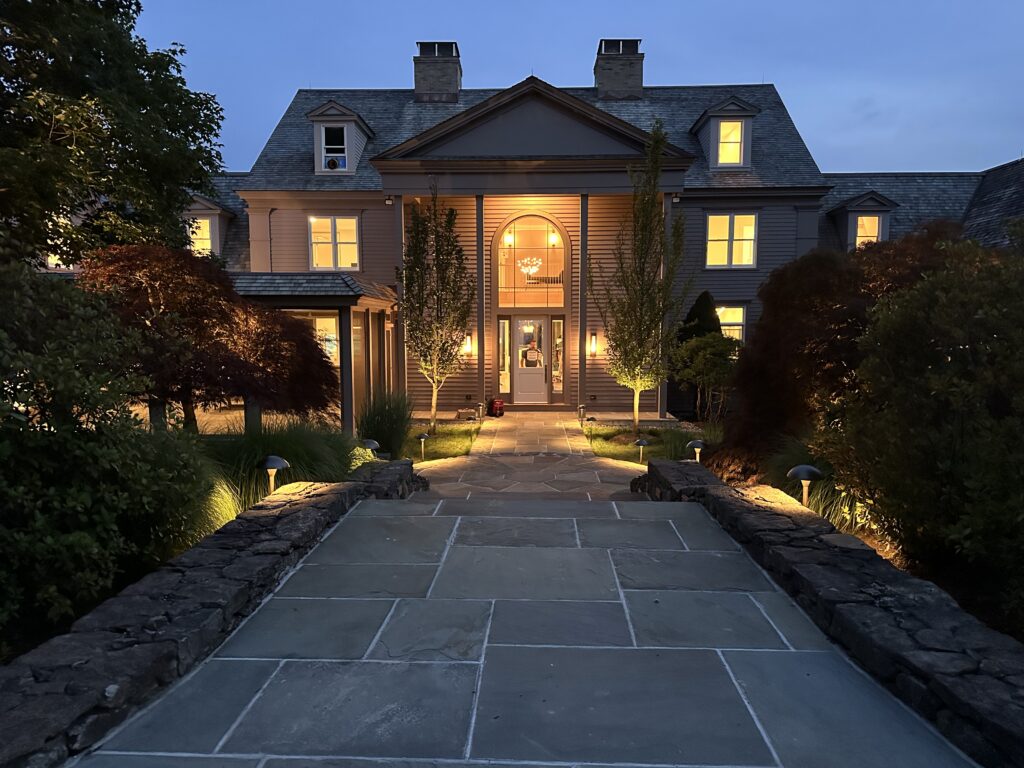
For many Connecticut homes, 2700K is one of the most popular choices.
This warm, yellow-white light creates a comfortable, welcoming appearance that works well with traditional architecture, natural stone, mature landscaping, and outdoor living spaces.
It is commonly used for:
- Front entryways
- Patios
- Garden beds
- Stone walls
- Walkways
- Outdoor seating areas
Because the light feels softer, it creates depth without drawing too much attention to the fixtures themselves.
3000K: A Balanced Choice
3000K offers slightly whiter light while still maintaining a warm appearance.
Many homeowners choose this temperature because it offers a brighter, cleaner look while still feeling warm and inviting.
It works well for:
- Contemporary homes
- Outdoor kitchens
- Driveways
- Architectural lighting
- Mixed landscape designs
For many properties, 3000K provides a good balance between appearance and visibility.
4000K: Crisp and Functional
At 4000K, the light becomes noticeably whiter.
This temperature is often chosen for areas where visibility is more important than creating ambiance.
Examples include:
- Large driveways
- Service areas
- Garages
- Side yards
- Security lighting
While functional, using 4000K throughout an entire landscape can sometimes make a property feel less inviting than warmer lighting.
What About 5000K?
Lamps with 5000K are known for producing a strong daylight effect.
Even though 5000K lights give good visibility, they are not much preferred when it comes to residential landscape lighting, because the cooler color temperature appears too harsh.
Instead, they’re more commonly used in commercial buildings, parking lots, and industrial properties.
Should Every Outdoor Light Be the Same Temperature?
Not necessarily.
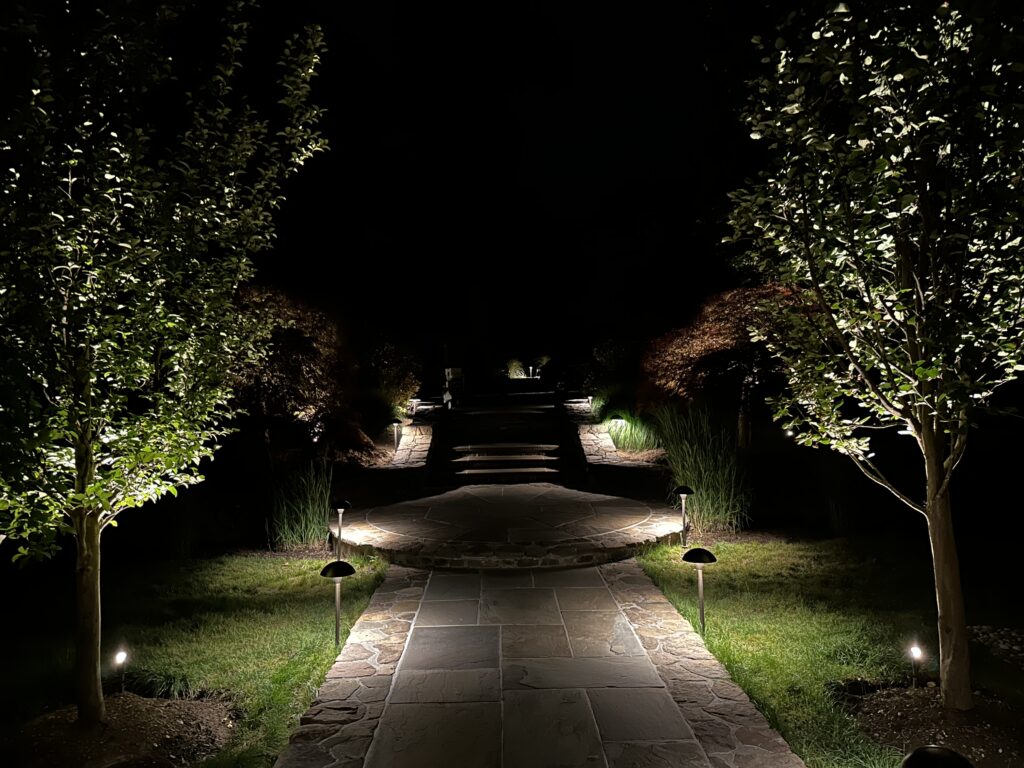
Many professionally designed lighting systems use different color temperatures for different purposes.
For example:
- Warm lighting around patios and seating areas
- Neutral lighting for driveways
- Brighter security lighting where additional visibility is needed beyond aesthetics
The goal is to create a property that feels cohesive while giving each area the type of light it needs.
Matching the Lighting to Your Home
The architecture of your home can also influence the ideal color temperature.
Traditional Connecticut Homes
Colonials, farmhouses, and historic homes often look best with warmer lighting between 2700K and 3000K.
These temperatures complement brick, stone, wood, and traditional landscaping.
Modern Homes
Contemporary homes often work well with slightly cooler lighting, particularly around architectural features and clean exterior lines.
Many homeowners still stay within the 3000K range to keep the property feeling welcoming.
Think About Your Landscaping
Landscape lighting should enhance your property rather than overpower it.
Warm lighting often works beautifully with:
- Mature trees
- Stone walls
- Flower beds
- Shrubs
- Natural wood features
Cooler lighting can sometimes flatten textures or make landscaping feel less natural.
Consider How You Use the Space
Different outdoor areas often benefit from different lighting goals.
For example:
Patios and Outdoor Living Areas
Comfort matters most in these spaces. Warm lighting creates a relaxed atmosphere that’s perfect for entertaining or unwinding outdoors.
Walkways and Steps
Visibility is important, but that doesn’t mean the fixtures need to be overly bright. Soft white light usually provides plenty of illumination.
Outdoor Kitchens
Slightly brighter lighting can make food preparation easier while still feeling comfortable for guests.
Driveways
Driveways benefit from lighting that improves visibility without overwhelming the front of the home.
Don’t Focus Only on Brightness
Many homeowners assume brighter is always better.
However, outdoor lighting is most effective when the brightness of the light complements its color temperature.
A dimmer light fixture with an appropriate color temperature produces better results than a brighter one with an improper color temperature.
Why Professional Outdoor Lighting Design Makes a Difference
Choosing the right color temperature is only one part of creating an outdoor lighting system that looks great after dark. The placement of the fixtures, where the light is being focused, the intensity of each fixture, and the layering of lighting designs can affect the final product.
With professional outdoor lighting design, you can bring everything together to create something that showcases the best parts of your home and outdoor living spaces.
Finding the Right Outdoor Lighting for Your Home
For many Connecticut homes, warm white lighting between 2700K and 3000K provides the most natural and welcoming appearance. Every property is different, however, and the ideal color temperature depends on your home’s style, landscaping, and how you use your outdoor spaces.
Home Media Designs creates custom outdoor lighting systems for Connecticut homes, with carefully selected fixtures, placement, brightness, and color temperature. Start planning your outdoor lighting installation today for a look that feels natural, inviting, and brings more life to your property after sunset.